
Getting Your Best Start at LSC
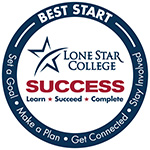 Lone Star College wants every student to get their best start and continue on the path to success. We want you to receive your associate degree, workforce certificate or transfer to a four-year university. Whatever your goals are, we are here to help you be successful!
You get a new start every month, every week, every day every class meeting - so, recommit to your BEST START with each step along your path to success. Here are some BEST START steps to increase your chances of achieving your goals:
- Set a goal for what you want to accomplish
- Make a plan to reach your goal
- Get connected with advisors, faculty and student organizations
- Stay involved with student life, classes, and activities
Set a Goal
 Goals are funny things: goals help us make our lives better, but they can become overwhelming if we're not careful. That's why it's important to think carefully about the goals you set and how you plan to achieve them.
Work smart! Breaking BIG GOALS into smaller steps makes them less intimidating. For example, your goal is to get an A in your class, and the smaller goals along the way are to get an A on this assignment and then an A on the test. If you work every day to achieve the smaller goals, you achieve your bigger goals.
This kind of goal setting is specific enough to achieve and the success you experience each step along the way builds confidence and helps you reach your long-term goals.
Make a Plan
 Have a plan and work your plan. Because a goal without a plan is just a wish.
Once you identify your goals, you need a plan to make them happen. A good plan gives you a strategy of small steps along the path to the BIG GOAL. Then work to take a step toward your goal every day or every week.
Need help planning your classes? Get started with the LSC pathway plans to help you take the right classes that count toward your degree. Then plan your class schedule - including planning time to study. A successful plan includes scheduling time with a tutor to get extra help when you need it, and take advantage of the Lone Star College Student Services to help you stay on the path to success.
Get Connected
 Although it sounds obvious, a goal will never become a reality unless you get connected. LSC offers Student Life activities to help you connect to other students who have similar interests to you.
Share your goal with friends, family, and your academic advisor to make sure that everyone is on the same page to help you be successful in your goal. Need help? Be sure to review the resources available at the top right of this web page.
Stay Involved
 Research shows that students who are actively involved with clubs and student organizations are more likely to complete their goals.
Surrounding yourself with people who have the same goals will keep you focused on the same outcome!
What's Next
Now that you are on the right path to success, it’s important to keep track of how you’re doing. Be honest with yourself. Figure out how to make changes if you stumble. Everyone slips from time to time. But measuring your progress can help you keep going.
By using any (but hopefully all) of the simple success strategies above to achieve your goals, you will have made your BEST START toward achieving your goals and continuing on the path to life success.
Related
Resources
Videos
Student Testimonials

Lone Star College Students explain how we help them get their BEST START.
What is Best Start?

BEST START myths and perceptions debunked.